RECYCLING SUCH A COLONIAL HOBBY!
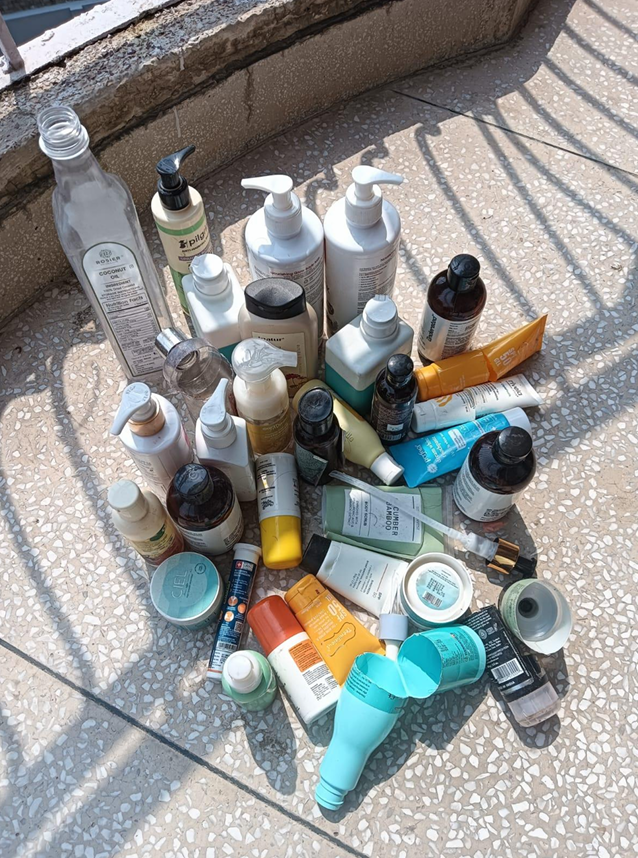
Numerous beauty brands emerging in India’s expanding market are proudly affirming sustainability by using recycled plastic as their packaging to become plastic-positive (the term “beauty” implies products under the categories of cosmetics, skincare, personal care, and cosmaceuticals). But what is it about your favourite Indian beauty brand boasting of recycling plastic waste, that could possibly reflect a colonial legacy? Isn’t recycling the greatest reparation to our environmental sins where we could have instead overwhelmed our neighbourhoods with plastic waste? More importantly, to begin with; why is the most dearly, practically convenient material called plastic during its production/manufacturing process, labeled a “pollutant” at its disposal?
The Streeter-Phelps equation explains this fiasco. Traversing back to the early twentieth century, it was when two engineers Streeter and Philps decided to examine a calm Ohio river in order to construct a scientific and mathematical model- a model that, through computing the scale of temperature, velocity, concentration of contaminants and other significant variables, would establish a threshold- a limit within which the water body could easily purify itself of negatively impacting foreign contaminants, also called “assimilative capacity”. This very threshold, declaring an ability of “measuring” and “predicting” the indigenous land’s resource, defines pollution. This is crucial, because anything beyond the threshold, technically called as assimilative capacity, would be pollution.
Perplexing, as it appears, to drag in a specific water body, called the Ohio river, to this discussion of plastic’s recycling pursuits. However, this was a significant anecdote to theorise modern environmental pollution. While the model was developed at a specific natural resource on indigenous land, how “pollution” was conceptualised is now universal. Now, pollution has a threshold- assimilative capacity, investigated from “cells to landscapes”. The model spans diverse geographical locations to innumerable contaminants and toxicants, normalising a believed possibility that threshold relations could be a determining attribute of human society’s relationship with the environment.
Discharging waste into our surroundings within this assimilative capacity to prevent any ecological cataclysm; this as a global policy, didn’t take much time to anchor in environmental state regulations around the world. Yet, what really makes this “sincere” initiative to protect our planet a colonial rhetoric? It is the assumption of entitlement, and that is colonialism; because how could a single scientific model possibly “assume” relations of the indigenous land to its resources around the whole world? A colonial intent assumes its entitlement to the indigenous land rather than procuring consent or a deliberation from the local indigenous population. The Ohio river, which certainly had a complex interaction with its embedded environmental and societal context, was reduced to a land relation concerning the non-indigenous colonial goals, and the model developed on its basis was universally applied to every single resource across the planet. The model is meant to benefit not the locals but only the powerful settlers not actively residing in the location. Why the term “settler” though? Today, colonialism is disguised as a historically-existing phenomenon. However, it’s an ongoing episode enabling and endorsing land relations based on unequal power hierarchies- the “settler” can choose to use, rather than reside in, the indigenous land as an everyday “sink” for resource exploitation. The “sink” acts as a dumping ground for waste within the indigenous land, generating profits for the settlers after the waste is processed. The “sink”, which is a result of an assumed entitlement to the land, only benefits the settlers.
Moreover, the complete process, from subjecting the indigenous land and its resources to non-consensual experimentation, to benefiting the settlers, is also a gentle reminder of snippets from the colonial past- when “archiving, cultivation, and control measures”, similar to modelling assimilative capacity, was performed to safeguard colonial powers thriving in various parts around the world. The assumption of access and entitlement by the colonial scientists in the past also ensured the colonies’ ecosystems were mitigated to the extent till which the land and its resources could be exploited thoroughly to benefit the colonial powers. Therefore, the comprehensive discussion on modelling intended for settler’s advantage is not newly invented but a classic colonial tactic to exploit the indigenous land and its resources.
Beguiling becomes today’s colonial goals because now they also approach with intentions of conservation. It is because now the colonial intent can deviously propose conservation strategies to mould indigenous land as the sink! Remembering how Streeter and Phelps exactly did it; assuming access to the indigenous Ohio river and assuming entitlement to procure and “safely” pollute the resource to benefit the settlers’ goals- an assumption which became universalised. To yawp again and repetitively, this is colonialism!
The colonial structure described is still conserved generously in India, particularly in the context of recycling. Weaving this assimilative capacity to the plastic waste’s pollution- the well-intentioned beauty brands in India proudly affirming their commitment to use “recycled” plastic waste as their packaging in their online market- does the jargon suffice to peacefully hoard products? What explains the colonial connotations is the presently persisting lacunae of awareness- the law governing the country and its connection to the on-ground reality.
It is the overarching law in the country- the “Plastic Waste Management Rules”, and recently amended in 2022. It clearly states that “Recycling of Plastic Waste shall be only as per the IS 14534:1998 ” IS 14534:1998 is a sub-category within plastic waste-management rules. Interestingly, these protocols did not develop in isolation; as the “IS document” asserts- “considerable assistance has been derived from ASTM D 5033-90 ‘Standard guide for the development of standards relating to the proper use of recycled plastics’, issued by American Society for Testing and Materials, USA.”. Upon accessing the official website, an inconsistency in the code number of the guide was found yet entailing critical briefing-
- An absence of general parameters enunciating the processing and manufacturing of final consumer products made of virgin plastic polymers.
- The USA had already withdrawn this protocol in 2007.
It visibly indicates how the protocols encouraged plastic’s re-consumption (through recycling) without any transparency on the nature of its production, and this enigmatic model finally proved as ineffectual in the modern USA. Gripping is the fact that a disposed model not only continues to inspire the Indian standards but the latter’s premise is also expanding to continue existing.
So this supposed well-intentioned Indian “IS 14534:1998” protocol to control plastic’s waste pollution begins with mandatory directions, out of which three are compelling:
- Plastic waste classification: There is division of plastic waste into four categories of recycling, according to its level of contamination, and the fuel and chemical quantum possible to retrieve from waste.
- Lack of recycling guideline: An observation has been made that no recycling technology or facility is specified.
- Usage of plastic waste: There are recommendations to use of recycled plastic waste into products like “shampoo” but there is no particular mention of the beauty industry.
This upgrades to the 2023 amendment, where modern technologies are introduced and clarified, and decontamination of plastic waste is suggested. While there is still no specific mention of the beauty industry through any jargon, even the term “shampoo” was absent in the recycled products exemplified at the end. There is only a vague category of “Others” as post-consumer plastic goods encompassing industrial and commercial goods, adding that no centralisation of network for recycling is present and that the producers are responsible for recycling their own plastic waste, which would be explained further. It also finally acknowledges the complexity of many plastic polymers requiring advanced recycling technology and facilities.. Mirroring its referenced USA’s standard guide, the protocol still lacks general parameters describing the complete life cycle of the virgin plastic polymers’ materials. Lack of transparency upon is also noticed upon:
- The amount of plastics as a resource procured from the indigenous land
- Distribution of its usage within various sectors of the market
Great lack of transparency indicates great exploitation of the land, and becomes a part of the colonial intent as exploiting the resource would benefit the settlers.
The updated protocol still fails to specify crucial elements, making it necessary to understand why plastics refuse to be recycled beyond theory but only pollute the region. Currently, India generates approximately 3.5 million tonnes of plastic waste annually, but this resumes with a discrepancy. While one report claims that only ten percent of the waste is actually recycled, the other takes it up to thirty percent. The statistics are inclusive of all economic sectors but interestingly there is no proper data explicating numbers specifically for the beauty industry- the very industry prevailing at a share of 15 billion dollars in India and would probably augment to 34 billion by 2028 (ecobusiness, ET2). Nevertheless, there is a dire emphasis on some matters- lack of appropriate infrastructure and logistics to handle proper waste collection and its segregation to recycle the valuables. Also, modern recycling facilities that could systematically process a range of simple or complex plastic packaging are scarce. Even if the facility develops and modernises, plastic as a material is not designed to be completely recyclable! The most common example is the “Thermoset” plastics. Constituting irreversible bonds, they can not be melted and reshaped once hardened. Examples are toothpaste and lotion tubes, straws, pesticides containers, hygiene plastics like diapers, etc. Basically, it is impossible to recycle some plastic types.
Even more importantly, why recycling’s theory disconnects from its practicability points to another on-ground reality- that the complete waste management sector dealing with plastics is purely informal in India. It incorporates 3.5 million waste-collectors but is nowhere acknowledged in the IS protocol. Such a significant stakeholder sphere isn’t recognized enough, creating a communication gap between them and their respective recycling facilities. Lets not forget that plastic producers are held responsible for handling their own waste. So this absence of a centralized waste-collecting mechanism, and lack of recognition of the ones who deserve to, leads to those waste-collectors dumping the majority of the plastic waste in the “sink” and sending only very few of the rest waste for recycling. So the pollution by the plastics persists.
Resuming the colonial connotations of the whole well-intentioned recycling scheme- the protocol Moulds the financial reality of the local indigenous waste-collectors, where they are forced to survive on former’s framework that exploits the indigenous land and benefits the settlers, rather than engaging in a more sustainable employment option in their own indigenous land. Another one- whenever a beauty brand’s representative would be in contact, they would rarely offer refill packaging options in order to reuse the empty containers. A few might be doing it, but it is still widely unpopular, which is also colonial since the indigenous Indian practice is to reuse and preserve a particular packaging or container repetitively.
Therefore, the IS protocol, with considerable influence from the US protocols, failed to address the specificity of the Indian context but assumed an access to the land without consulting the local indigenous population. These well-intentioned IS standards and recycling mechanisms, hence, deem futile for addressing plastic waste’s pollution. The “assimilative capacity” of pollution, in this matter, is incompatible with the plastic waste, because as discussed comprehensively, the complexity of plastic as a material and the approach of using it and recycling it- it just does not adjust to pollution’s concept of thresholds!
Unfortunately so, plastics, a silent poison, will continue infiltrating the indigenous land as a colonial well-intentioned goal of recycling- it is because what drives a fervent struggle to improve recycling’s mechanism in India is the fact that plastic consumption is supposed to hike up to 70.5 million tonnes by 2035. As a densely populated country, since India is running out of enough land to serve as the waste’s “sink”, recycling is stressed upon to maintain enough space in the “sink” and plastic waste’s pollution under the supposed assimilative capacity. The belief that recycling will keep plastic waste in India under a manageable threshold sustains the colonial agenda, where indigenous land is exploited as a resource to benefit the settlers. Recycling does not solve but sustains modern environmental pollution, reinforcing the toxicity of the Indian beauty industry, where the practices of plastic packaging and consumption are devoid of the indigenous specificity.
With a growing need of investigation more than ever, what matters truly is how the upcoming revisions of the protocols would take place- will the IS protocols contemplate for the good of the indigenous land? Till then, though a futile mechanism, recycling remains a colonial triumph!
CITATIONS
Lim, Amanda. (2021, October 18). “Give more than we take’: Indian D2C brand Pilgrim pledges to become plastic positive beauty brand.” CosmeticsDesignASIA. https://www.cosmeticsdesign-asia.com/Article/2021/10/18/Indian-D2C-brand-Pilgrim-pledge s-to-become-plastic-positive-beauty-brand/
Gupta, A. (2023, February 1). “Zero-waste brands stir up India’s beauty and personal care industry.” Eco-Business. https://www.eco-business.com/news/zero-waste-brands-stir-up-indias-beauty-and-personal-ca re-industry/
Dsouza, G. (2024, June 26). “Blue Beauty Trend: 10 sustainable beauty brands to try in 2025.” Nykaa. https://www.nykaa.com/beauty-blog/sustainable-beauty-brands/
Liboiron, Maz. (2021, May). “Introduction”. Pollution is Colonialism. Duke University Press. (pp.1-38)
Liboiron, Maz. (2021, May). “Land, Nature, Resource, Property”. Pollution is Colonialism. Duke University Press. (pp.39-80)
“Plastic Waste Management (Amendment) Rules, 2022”. Indian Pollution Control Association
(1998). “Indian Standard: Guidelines for Recycling of Plastics.” Bureau of Indian Standards. Internet Archive. https://archive.org/details/gov.in.is.14534.1998/page/n5/mode/2up
(2023). “Indian Standard: Guidelines for Recycling of Plastics.” Bureau of Indian Standards. Internet Archive. https://archive.org/details/gov.in.is.14534.2023
Tandon, A. (2024, October 1). “[Explainer] What is recycling? How does it work in India?”. Mongabay-India. https://india.mongabay.com/2024/10/explainer-what-is-recycling-how-does-it-work-in-india/
Gupta, A. (2023, February 1). “Zero-waste brands stir up India’s beauty and personal care industry.” Eco-Business. https://www.eco-business.com/news/zero-waste-brands-stir-up-indias-beauty-and-personal-ca re-industry/
(2023, January 12). “India recycles only 30 per cent of 3.4 MT plastic waste generated annually: Report.” The Economic Times. https://economictimes.indiatimes.com/news/india/india-recycles-only-30-per-cent-of-3-4-mt plastic-waste-generated-annually-report/articleshow/96918352.cms?from=mdr%20Ind
(2024, September 4). “India beauty and personal care market to touch $34 billion by 2028: report.” The Economic Times. https://economictimes.indiatimes.com/tech/technology/india-beauty-and-personal-care-marke t-to-touch-34-billion-by-2028-report/articleshow/113064581.cms?from=mdr (2024, November 26). “Which plastics cannot be recycled? Guide to Non-Recyclable Materials.” IT RECYCLE. https://it-recycle.uk/which-plastics-cannot-be-recycled-guide-to-non-recyclable-materials/#:~ :text=Non-recyclable%20plastics%20include%20ones%20that%20can%E2%80%99t%20be %20recycled,or%20reshaped.%20This%20stops%20them%20from%20being%20recycled.
(2010, December 31). “Standard Guide for Development of ASTM Standards relating to Recycling and Use of Recycled Plastics” (Withdrawn 2007). (n.d.). https://www.astm.org/d5033-00.html
Sharma, M. (2024, February 5). “India recycles only 8 percent of its plastic waste, reveals study.” The Week. https://www.theweek.in/news/india/2024/02/05/india-recycles-only-8-percent-of-its-plastic-w aste-says-study.html
Related Articles
The cost of technology: What e-waste is doing to our planet
We use electronic devices every day and consider them an important tool for communication and entertainment: but, where do they go to die?